Water Line Repair Toronto
A broken water service line can waste thousands of litres per day, undermine your foundation, and leave your home without water. Toronto homes, especially those built before 1960, face serious risk from aging galvanized and lead water service lines. Our water line repair Toronto licensed plumbers provide 24/7 emergency plumbing response to water line emergencies across the GTA, and we are the lead pipe replacement specialists Toronto homeowners trust.
Signs Your Water Line Needs Repair or Replacement
Your water line repair Toronto service line, the underground pipe connecting the city water main to your home, operates under constant pressure and is susceptible to corrosion, freeze damage, root intrusion, and ground movement over its service life. Recognizing the warning signs of a failing water line early can mean the difference between a manageable repair and a burst pipe Toronto emergency that damages your foundation and yard. If you notice any of the following signs, call us immediately. Underground water line leaks waste thousands of litres per day and can begin undermining your foundation within days of a major break.
Sudden Whole-House Pressure Drop
If water pressure drops simultaneously at every tap in your home, upstairs, downstairs, and outside, the problem is almost certainly in the service line between the street and your home, not in a branch line inside the house. A sudden pressure drop that persists after checking the municipal water status is a strong indication of a break or significant leak in your water service line.
Wet Patches in Yard or Driveway
Unexplained wet, soggy, or persistently damp areas appearing in your yard or driveway, particularly in a line running from the street toward your house, can indicate an underground water line leak below. The wet area often appears and grows over days, not hours. Similarly, cracks appearing in your driveway surface over the line path can indicate soil erosion from a subsurface leak.
Discoloured or Rust-Coloured Water
If rust-coloured, brown, or discoloured water appears simultaneously from all taps in your home, not just one fixture, the problem is in the water service line or the interior main, not a single fixture or branch. Rust-coloured water from all fixtures indicates corrosion in the galvanized steel or lead service line. This is a health concern and should be addressed promptly.
Unexplained Water Bill Spike
If your water bill increases significantly without any change in household usage, an underground water line leak is one of the most common causes. The water meter continues recording all the water flowing through your service line, including water that is escaping underground before reaching your home. A $30–$50 per month unexplained increase in water costs is worth investigating with a service line inspection.
Sinkholes or Depressions in Yard
Small sinkholes or settling depressions appearing in your yard, particularly over the path of your water service line, indicate soil being washed away by a pressurized underground leak. Sinkholes can expand rapidly and can become a safety hazard. A person or child can break through the surface if the void beneath becomes large enough. Call immediately if you see ground subsidence forming.
Water Pooling in Basement at Entry Point
Water appearing in your basement near the point where the service line enters your foundation wall, particularly if it appears during dry weather and is not associated with drainage issues, can indicate a leak at the service entry point or in the interior main water line just inside the foundation. This entry point is a common failure location in older Toronto homes where the service line passes through masonry or concrete.
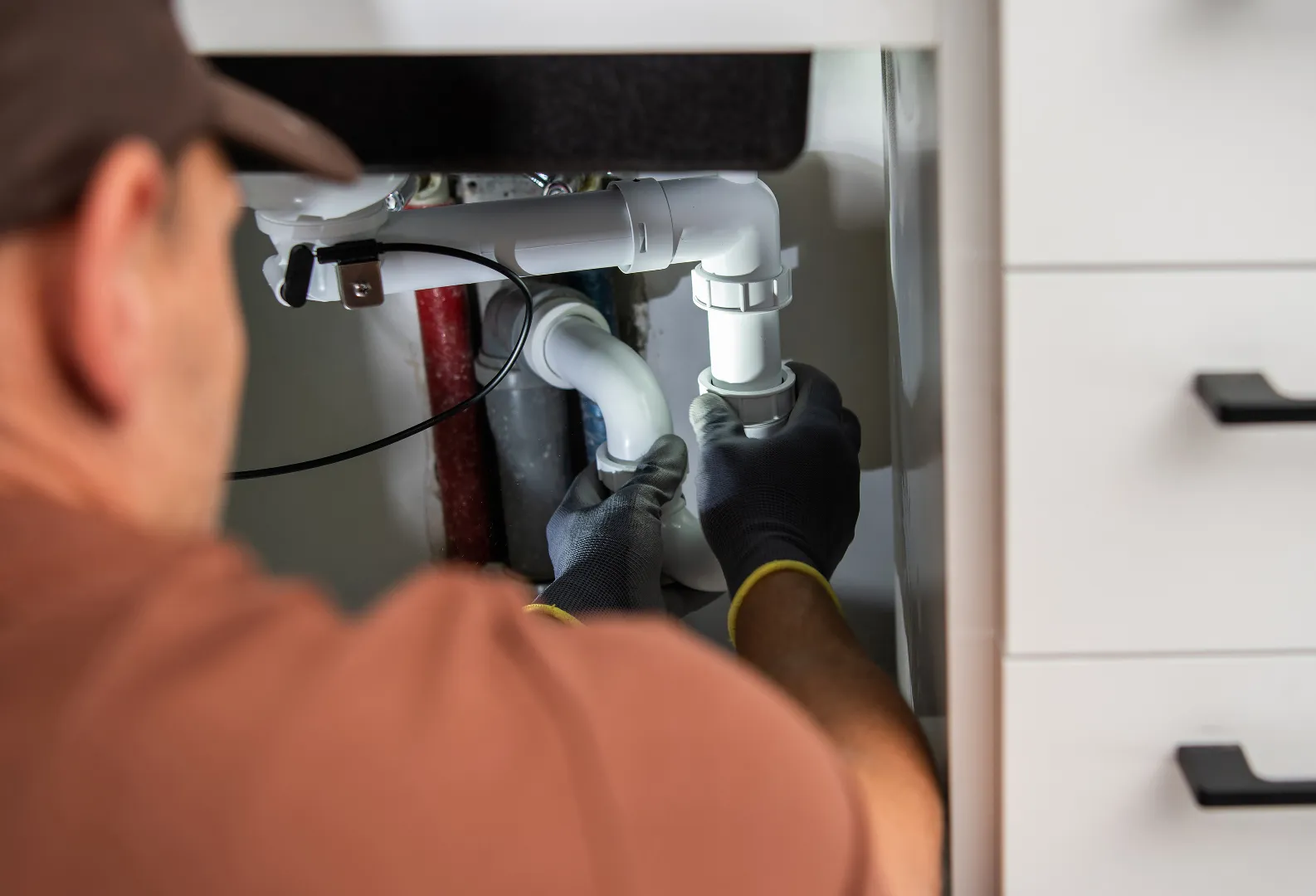
Noticing any of these warning signs? Don't wait. Call us now at (289) 514-1836. We'll assess your water line and provide a written diagnosis within 24 hours.
Types of Water Line Problems We Fix
Toronto's specific climate, geology, and housing stock create a distinct set of water line failure patterns. The city's freeze-thaw cycle, which regularly causes frozen pipe Toronto emergencies in shallow or uninsulated runs, the clay-heavy soil common across the GTA, and the age of Toronto's residential housing stock, much of it built between 1900 and 1970, all contribute to predictable failure modes in water service lines. Here are the water line problems we handle most frequently across the GTA.
Cracked or Burst Water Service Line: Frost Heave
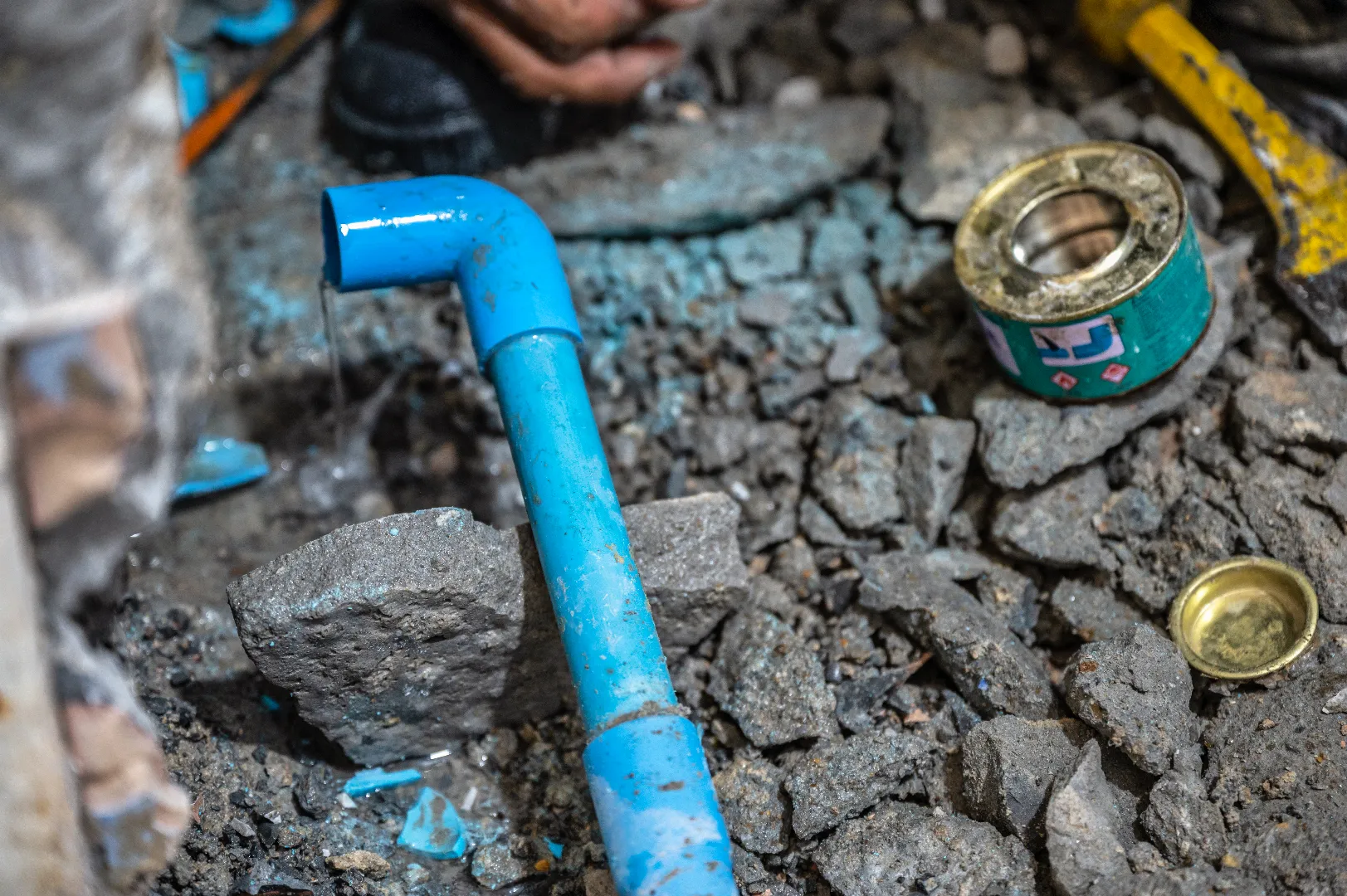
Toronto winters regularly push temperatures to -20°C and below, causing significant ground movement through the freeze-thaw cycle, particularly in the clay-heavy soil that underlies much of the GTA. This seasonal ground heave places stress on underground pipes, and water service lines installed at insufficient depth or through rocky soil are particularly vulnerable. A frost-heaved joint or cracked pipe can fail suddenly, causing a major water line break that requires emergency repair and excavation. This is one of the most common reasons we receive emergency water line calls in late winter and early spring across Toronto.
Corroded Galvanized Water Service Lines
GTA homes built before 1960 were commonly fitted with galvanized steel water service lines. Galvanized pipe has a service life of 40–70 years depending on the water chemistry and soil conditions, meaning a home built in 1950 is long past the expected life of its original galvanized service line. As galvanized steel corrodes from the inside out, the pipe walls thin, rust particles enter the water supply, and flow is progressively restricted as internal corrosion buildup narrows the pipe diameter. A galvanized service line that has reached the end of its life requires full replacement. There is no cost-effective method to rehabilitate severely corroded galvanized pipe.
Joint Failures at Service Entry Point
The point where the water service line enters your home through the foundation wall is one of the most common water line failure locations. Ground movement, pipe corrosion, and the differential settlement of the foundation relative to the underground line all place stress on this joint over time. A failed service entry connection allows water to seep into the basement along the pipe penetration, and can worsen rapidly if the pipe itself cracks at the point of stress. We repair service entry connections as an isolated repair without requiring full service line replacement in many cases, similar to the targeted approach we take with pipe repair and leak detection inside the home.
Root Intrusion and Physical Damage
Tree roots seeking moisture can intrude around and through water service lines, particularly older lines with deteriorating joints or small cracks. Unlike sewer lines (which roots actively enter for nutrients), water service lines under pressure are less prone to root intrusion through small cracks, but roots can grow around the pipe and apply crushing pressure or crack joints as the root mass expands seasonally. Excavation work by neighbouring utilities or city contractors can also physically damage water service lines. If your water pressure dropped following nearby road or sidewalk construction, physical damage to your service line should be investigated.
Pressure Regulating Valve Failure
The pressure regulating valve (PRV) is installed on the water service line inside your home to reduce the municipal water pressure, which can exceed 100 PSI, to the 50–70 PSI range suitable for residential plumbing fixtures. A failed PRV can cause abnormally high or low water pressure throughout the home, banging pipes (water hammer), and accelerated wear on fixtures and appliances. PRV failure is a relatively simple and inexpensive repair that resolves whole-house pressure issues without requiring any excavation or service line work.
Lead Water Pipe Replacement in Toronto: What You Need to Know
Lead water service lines are a serious and widespread public health issue in Toronto. Homes built before 1955 in Toronto, Etobicoke, Scarborough, and North York commonly have lead water service lines connecting the city water main to the home. Health Canada has established that there is no safe level of lead in drinking water. Even low-level chronic exposure, particularly in children under six, is associated with developmental impacts. If your home has a lead water service line, replacing it is the only permanent solution. Filters reduce but cannot eliminate lead exposure from a corroded lead service line.
Is Your Home at Risk for Lead Pipes?
Lead water service lines are most common in Toronto homes built before 1955, though some homes built as late as 1960 may have lead service connections. The risk is highest in older established neighbourhoods where the original plumbing infrastructure has never been replaced. Areas with the highest concentration of lead water service lines in Toronto include:
- •Leslieville, The Beaches, and East York
- •Rosedale, Forest Hill, and Leaside
- •Cabbagetown and Kensington Market
- •Older parts of Etobicoke (south of Bloor)
- •Older parts of Scarborough (Kingston Road corridor and south)
- •Downtown Toronto pre-war residential streets
To check whether your address has a confirmed lead service line, call 311 or check the City of Toronto's lead pipe database online by address. The City's records are not 100% complete. If your home is from the pre-1955 era and the City shows no record, a visual inspection of your service entry pipe is the definitive method.
How to Identify a Lead Pipe
Look at the pipe entering your home near your water meter. Lead pipe is dull grey in colour, bends easily by hand, and when scratched with a key will reveal a shiny metallic surface underneath the dull oxide layer. Copper pipe is a distinctive orange-brown colour. Plastic (PVC or polyethylene) pipe is clearly plastic. Galvanized steel pipe is silver-grey and rigid, with visible threaded joints.
City of Toronto Lead Pipe Replacement Program
The City of Toronto operates a Lead Pipe Replacement Program that covers the city-owned portion of the lead service line, from the water main in the street to the property line (curb stop), at no cost to the homeowner.
The homeowner is responsible for the private portion, from the curb stop to the house, through your yard and foundation. This is the section Emergency Repair Plumbers replaces.
Critical: Coordinate for a Single Excavation
If both the city portion and your private portion need replacement (which is the case for most lead service lines), you can dramatically reduce cost and disruption by coordinating the timing with the City so both sides are replaced in a single excavation. Call 311 first to initiate the City's process, then call us to schedule your private-side replacement to coincide. Two separate excavations across your front yard cost significantly more than one coordinated dig.
Interim Measures While Waiting for Replacement
If you have a confirmed lead service line and are waiting for replacement to be scheduled, the City of Toronto recommends: flushing your cold water tap for 1–2 minutes before using it for drinking or cooking (to clear standing water that has been in contact with the lead pipe), using only cold water for drinking and cooking (hot water dissolves lead more readily), and using a certified NSF/ANSI 53 lead-certified water filter for drinking water as an additional precaution. These measures reduce but cannot eliminate lead exposure from a lead service line. They are bridge measures, not a permanent solution. Replacement is the only permanent fix.
Who Owns What: Private vs. City Water Line in Toronto
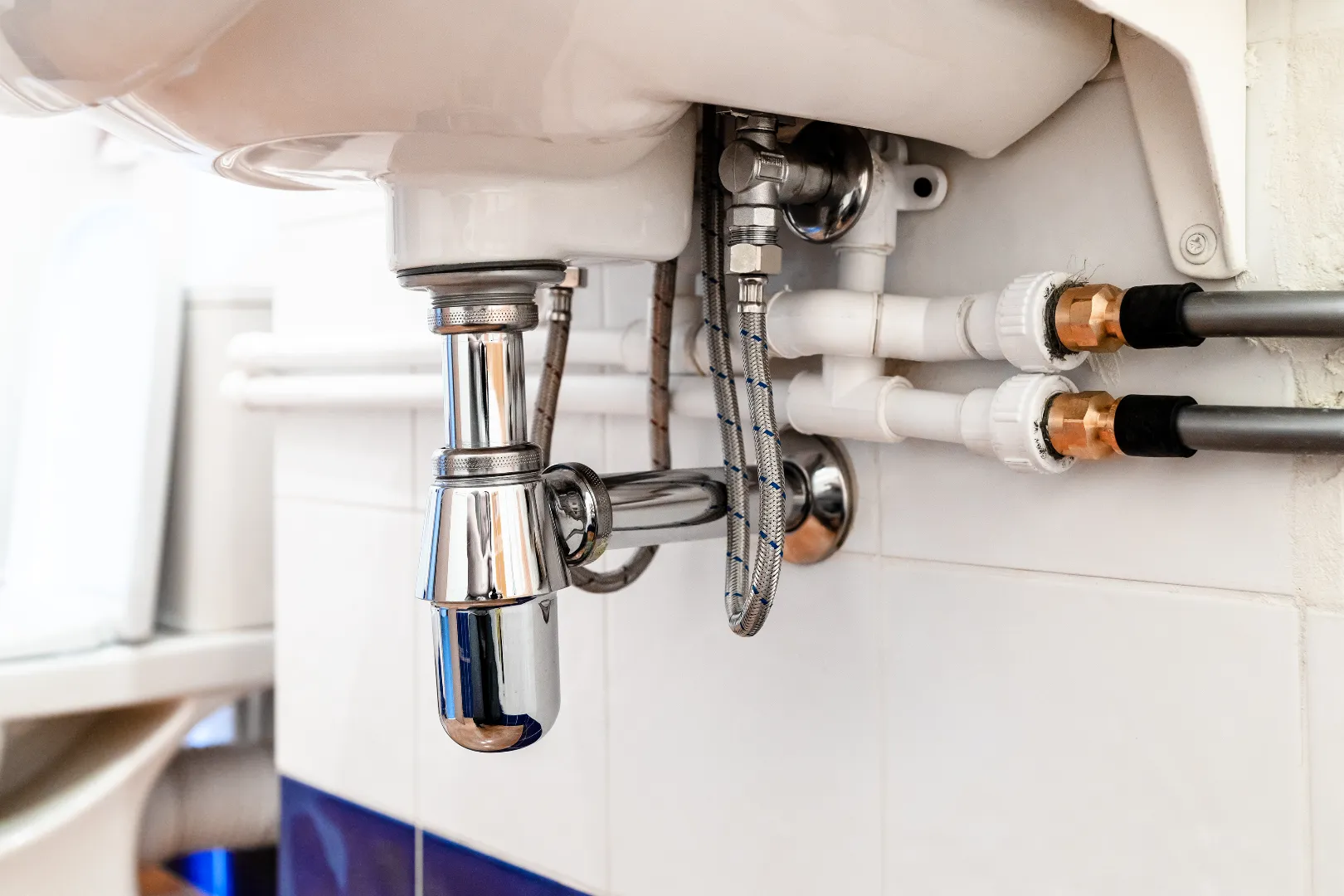
One of the most common sources of confusion when a water line problem arises is understanding exactly who is responsible for which portion of the water system, and therefore who pays for what. The City of Toronto maintains a clear ownership split that governs responsibility and determines whether City crews or a licensed private plumber will perform the work.
| Component | Owner/Responsible Party | Who Repairs It |
|---|---|---|
| Water main (in the street) | City of Toronto | City of Toronto, call 311 |
| Curb stop (shut-off at property line) | City of Toronto | City of Toronto, call 311 |
| Service line (curb stop to foundation) | Homeowner | Licensed plumber, permit required |
| Interior water supply system | Homeowner | Licensed plumber |
| Water meter | City of Toronto | City of Toronto, call 311 |
| Lead pipe, city portion (main to curb stop) | City of Toronto | City of Toronto, free under Lead Pipe Replacement Program |
What This Means Practically
If your water service line fails on the homeowner side (from the curb stop at your property line to your house), you are responsible for the repair and all associated costs, including excavation, materials, labour, and the City of Toronto building permit required for any water service line work on private property.
If the problem is on the city side (from the water main in the street to the curb stop), you call 311 and the City responds at no cost to you. Our job as your plumber begins at your property line and runs to your interior shut-off valve.
Building Permit Requirement
All water service line work on the private portion, including repair, partial replacement, and full replacement, requires a building permit from the City of Toronto. We pull the permit as part of the service. Permit costs typically run $200–$400 depending on the scope of work.
Any water line excavation also requires an Ontario One Call locate request (1-800-400-2255) filed at least five business days before digging begins to identify and mark all underground utilities in the area. We handle this as part of every water line replacement project.
Our Water Line Repair & Replacement Process
Water line replacement is one of the more complex residential plumbing projects. It involves coordinating with the City of Toronto, Ontario One Call, and Enbridge (for any gas lines in the excavation area), pulling the correct permits, and executing the work carefully to restore service with minimal disruption to your household and property. Here is exactly how we approach every water line replacement project in Toronto and the GTA.
Emergency Shut-Off at Curb Stop
For emergency water line breaks, the first step is shutting off the water supply at the curb stop, the City-owned shut-off valve at your property line. If you do not know where your curb stop is or it is inaccessible, we locate and operate it. This immediately stops the flow of water through the broken section and allows the emergency repair process to begin.
Locate the Water Line
We locate the path of your water service line using a tracer wire (if present on newer installations) or a ground-penetrating probe. Accurate line location before excavation prevents unnecessary digging and protects other underground services. Line location is also required to plan the excavation path and request utility locates from Ontario One Call.
Ontario One Call Utility Locate
Before any excavation, we file an Ontario One Call locate request (1-800-400-2255). All underground utilities, including gas, electrical, telecommunications, and drainage, in the excavation area are marked by the respective utility companies. Ontario law requires this locate to be completed at least five business days before digging begins for non-emergency situations. For emergency water line breaks, an emergency locate request can be processed more rapidly.
Permit Application
We apply for the required City of Toronto building permit for water service line work before excavation begins (or immediately following emergency shut-off for emergency situations where repair cannot be delayed). Permit fees are additional and typically run $200–$400 depending on the scope of the replacement project.
Excavation and Pipe Replacement
We excavate to the depth of the water service line, typically 5–7 feet in Toronto to provide adequate frost protection, and replace the damaged section or the full service line with Type K copper or HDPE polyethylene pipe, both approved for water service line use in Toronto. For lead pipe replacement projects, the new pipe is connected to the curb stop at the property line and run through your foundation to the interior shut-off valve.
Pressure Test and Service Restoration
The new service line is pressure tested before backfilling to confirm no leaks exist at joints or connections. We then restore water service, flush the new line to clear any debris from installation, and confirm adequate pressure and flow at your fixtures. A final inspection is conducted at the building permit stage before the permit is closed.
Backfill and Surface Restoration
We backfill the excavation with compacted granular material, restore surface grades, and replace sod, interlock, or concrete as applicable for the excavation area. We leave your property as close to its pre-excavation condition as practicable. Road or boulevard restoration (where the service line crosses municipal property) is coordinated with the City and may involve additional permit requirements and restoration standards.
Lead Pipe Replacement: Coordinating with the City
For lead pipe replacement projects where the City of Toronto's Lead Pipe Replacement Program will be replacing the city-owned portion, we coordinate directly with City crews to schedule both replacements, private side and city side, simultaneously in a single excavation. This single-excavation approach saves significant cost (typically $1,500–$3,000 compared to two separate digs) and reduces disruption to your property and the boulevard. Call 311 first to initiate the City's process and confirm your address is in their lead pipe program, then call us to coordinate the private-side replacement timing.
Water Line Repair & Replacement Costs in Toronto (Approximate)
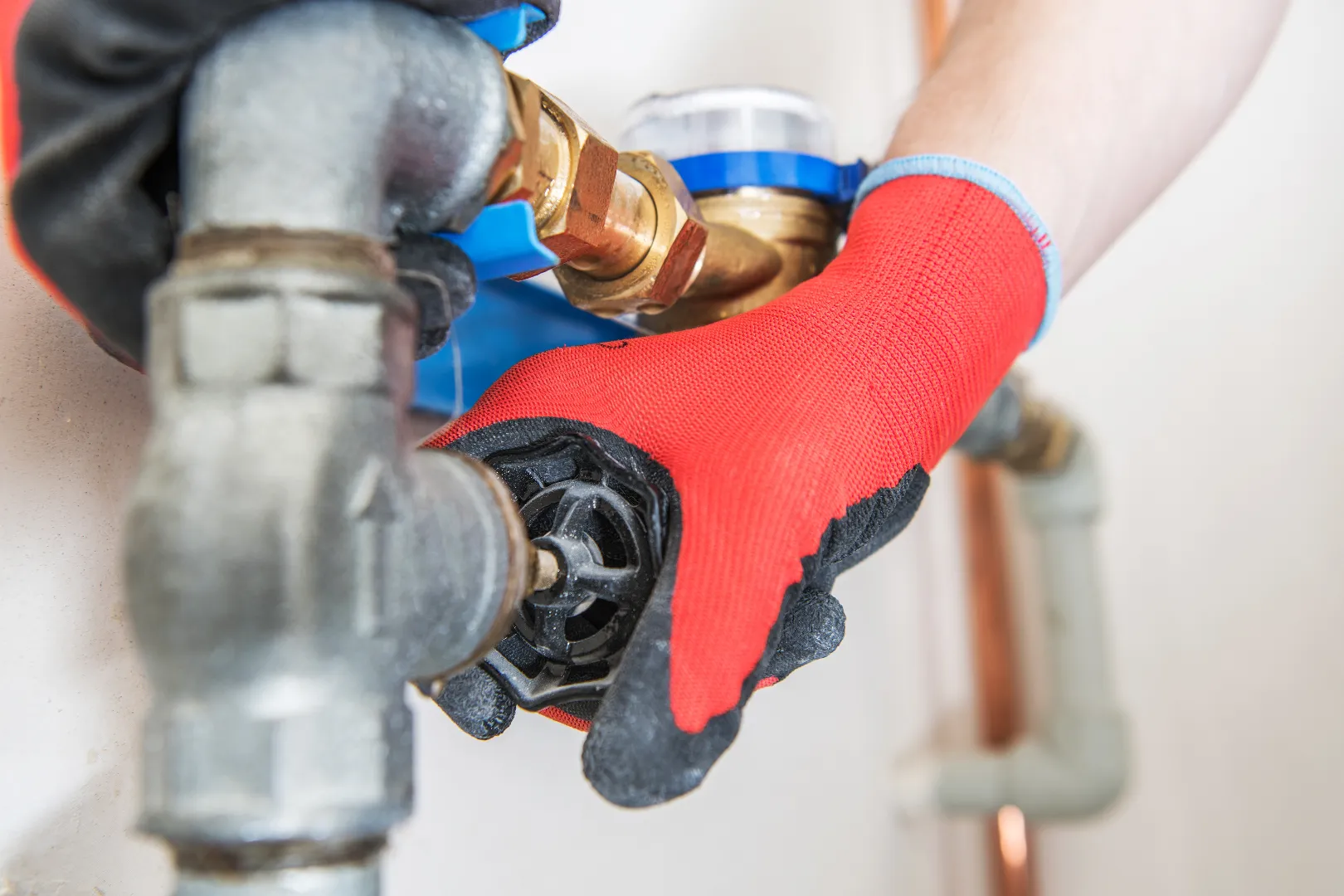
All prices below are approximate ranges for typical Toronto residential water line projects. Whether you need a burst pipe Toronto repair, a lead pipe replacement, or a frozen pipe Toronto emergency resolved, actual costs depend on the depth of the line, length of the run, soil conditions, access, pipe material being replaced, and permit fees. We provide firm written quotes after an on-site assessment before any work begins.
Prices are approximate. Final price confirmed on-site. All invoices subject to HST (13%). City of Toronto building permit costs ($200–$400) and Ontario One Call utility marking fees are additional.
| Service | Price Range (CAD) | Notes |
|---|---|---|
| Emergency Water Line Repair (Minor Crack/Joint) | $500 – $1,500 | Spot repair of a localized crack or joint failure. Includes excavation, repair, and pressure test. |
| Partial Service Line Replacement (Up to 30 ft) | $2,500 – $5,000 | Replacement of a section of water service line from curb stop to foundation. Includes excavation, new copper or HDPE pipe, and pressure test. |
| Full Water Service Line Replacement | $3,000 – $7,000 | Complete replacement from curb stop to interior shut-off. Includes excavation, new pipe, backfill, and basic surface restoration. |
| Lead Pipe Replacement (Private Portion Only) | $2,500 – $5,000 | Replacement of homeowner-owned lead service line from curb stop to house. City replaces their portion at no cost under Lead Pipe Replacement Program. |
| Interior Main Water Line Replacement | $800 – $3,000 | Replacement of the main water line inside the home from service entry to distribution. No excavation required. |
| Pressure Regulating Valve Replacement | $400 – $800 | Replacement of failed or malfunctioning PRV on the interior main water line. Resolves whole-house pressure issues. |
| Emergency Shut-Off Valve Installation | $300 – $600 | Installation of a new accessible interior shut-off valve on the water service line, essential for emergency water control. |
Note: City of Toronto building permit costs ($200–$400) and Ontario One Call utility marking fees are additional. HST (13%) applies to all labour and materials on all invoices.
Frequently Asked Questions: Water Line Repair Toronto
How much does water line replacement cost in Toronto?
Water service line replacement in Toronto typically costs $3,000–7,000 depending on length, pipe material, and permit costs. Lead pipe replacement (private portion) runs $2,500–5,000. The City of Toronto replaces the city-owned portion of lead service lines at no charge. Coordinate timing with them to share excavation costs. We provide exact quotes after an on-site assessment.
Read more about water line replacement costs in Toronto
The main cost factors for water service line replacement in Toronto are the length of the run (most Toronto lots have a service line between 15 and 30 feet from the curb stop to the foundation), the depth of the line (deeper lines require more excavation labour), the soil conditions (clay soil is harder to excavate than sandy or granular soil), the pipe material being replaced (lead and galvanized require careful handling and disposal), and the cost of surface restoration after backfilling. The City of Toronto building permit (typically $200–$400) and Ontario One Call utility locate fee are separate from our labour and materials cost. We provide written fixed-price quotes after on-site assessment. We do not bill time-and-material on standard replacement projects.
How do I know if I have lead water pipes in my Toronto home?
Homes built before 1955 in Toronto are most likely to have lead water service lines. Call 311 to check the City of Toronto's lead service line database by address. You can also look at the pipe entering your home near the water meter. Lead is dull grey, bends easily, and scratches to a shiny surface. Copper looks orange-brown; plastic is clearly plastic.
Read more about identifying lead pipes in Toronto homes
The City of Toronto's lead pipe database (accessible through 311 or the City's website) covers most confirmed lead service line addresses but is not comprehensive. Some older properties with lead pipes are not yet catalogued. If your home was built before 1955 and the City shows no record, a visual inspection of the service entry pipe near your water meter is the most reliable method. Lead pipe is distinctively soft. It will bend under moderate hand pressure and the exposed metal under the dull grey oxide layer is bright silver. If you are still uncertain after a visual inspection, we can assess your service entry pipe during an on-site visit. Health Canada recommends that any confirmed lead service line be replaced as soon as practicable. There is no safe exposure level for lead in drinking water.
Who is responsible for the water line from the street to my house in Toronto?
The responsibility is split at the curb stop at your property line. The City of Toronto owns and maintains the water main in the street and the curb stop. You as the homeowner own everything from the curb stop to your house, including the underground service line through your yard. All work on your private portion requires a City of Toronto building permit.
Read more about water line ownership in Toronto
The curb stop is typically located at or near the property line between your front yard and the city boulevard (the strip of land between the sidewalk and the street). It is usually a metal access box flush with or slightly below the ground surface marked with a lid stamped "water." If your water line problem is on the city side of the curb stop, meaning the water main itself or the section between the main and the curb stop, you call 311 and the City responds at no cost. If the problem is from the curb stop to your house (which is the more common scenario for private homeowners), you are responsible. We work exclusively on the homeowner-owned private portion, from the curb stop through your yard and foundation to your interior shut-off valve.
Does the City of Toronto help pay for lead pipe replacement?
Yes, the City of Toronto's Lead Pipe Replacement Program replaces the city-owned portion of lead water service lines at no cost to homeowners. To qualify, your address must be confirmed in the City's lead pipe database (call 311). We handle the private-side replacement and coordinate timing with City crews so only one excavation is needed.
Read more about the City of Toronto lead pipe program
The City of Toronto's Lead Pipe Replacement Program was significantly expanded in recent years as part of the City's commitment to eliminating lead from the drinking water supply system. The program replaces the city-owned portion of lead service lines, from the water main in the street to the curb stop at the property line, at no cost to the homeowner. To participate, your address must be in the City's confirmed lead pipe database, which you can check by calling 311. The City schedules the replacement according to their program priorities. Wait times can vary. The homeowner remains responsible for the private portion from the curb stop to the house, which is Emergency Repair Plumbers' scope. When both sides need replacement, coordinating the timing for a single excavation is strongly recommended and we facilitate this coordination as a standard part of our lead pipe replacement service.
How long does water line replacement take?
A straightforward water service line replacement in Toronto typically takes one full day. Excavation happens in the morning, pipe replacement and pressure testing through the afternoon, and service restored by evening. More complex jobs involving rock, deep lines, or interior work may require two days. You will have a water shut-off for most of the working day.
Read more about the water line replacement timeline
The one-day timeline assumes a standard residential service line on a typical Toronto property, approximately 15 to 25 feet from curb to foundation, clay soil, and no significant underground obstacles. Factors that can extend the timeline include: encountering rock or large boulders during excavation (which requires breaking equipment), a service line that runs under a concrete driveway or interlocking stone (removal and restoration adds time), an unusually deep line, interior main work that requires shutting down the home's plumbing system for an extended period, or the need to schedule a City of Toronto inspection at a specific point in the process. We always aim to restore water service to your home by end of day on the working day we excavate. You should not need to be without water overnight on a standard replacement project.
Still Have a Water Line Repair Problem in Toronto & GTA?
Describe your water line repair issue below and a licensed Toronto & GTA plumber will call you back in under 15 minutes. No answering service, no voicemail.
- Licensed & Insured Master Plumbers
- 60-Minute Emergency Response in Toronto & GTA
- Real Plumber Answers, No Answering Service
- Upfront Pricing Before Any Work Begins
- 24/7 Service, 365 Days a Year Including Holidays
Limited Same-Day Spots Available Today
Our dispatch fills quickly. Submit now to secure your slot.
Get a Free Quote in 15 Minutes
Takes 30 seconds to fill out. We'll do the rest.
Related Plumbing Services
Pipe Repair Toronto
Burst pipes, pinhole leaks, and interior supply line repairs. Fast response across Toronto and the GTA.
Learn more →Emergency Plumbing Toronto
24/7 emergency response for water line breaks, burst pipes, and plumbing emergencies across the GTA.
Learn more →Sewer Line Repair Toronto
Sewer camera inspection, trenchless CIPP lining, and full sewer line replacement across Toronto and GTA.
Learn more →Related Reading
Water Line Break or Lead Pipe Concern? Call Now.
Underground water line leaks waste thousands of litres per day and can undermine your foundation. Lead water pipes are a health hazard with no safe exposure level. Our licensed Toronto plumbers respond 24/7 to water line emergencies and are the GTA's lead pipe replacement specialists, coordinating with the City of Toronto's Lead Pipe Replacement Program on every project.
Licensed Ontario Plumbers · Lead Pipe Replacement · City of Toronto Program Coordination · GTA-Wide Service