Faucet Leak Repair in Toronto: DIY vs. Calling a Plumber
Faucet leak repair in Toronto is one of the most searched plumbing problems in the GTA, and for good reason. A dripping faucet at just one drop per second wastes over 11,000 litres of water per year. At Toronto's water and wastewater rates, that single drip costs homeowners $40 to $60 annually. Multiply that by two or three leaky faucets, which is common in older Toronto homes, and the waste adds up fast. This guide will show you exactly which repairs you can handle and which are worth calling a licensed plumber for.
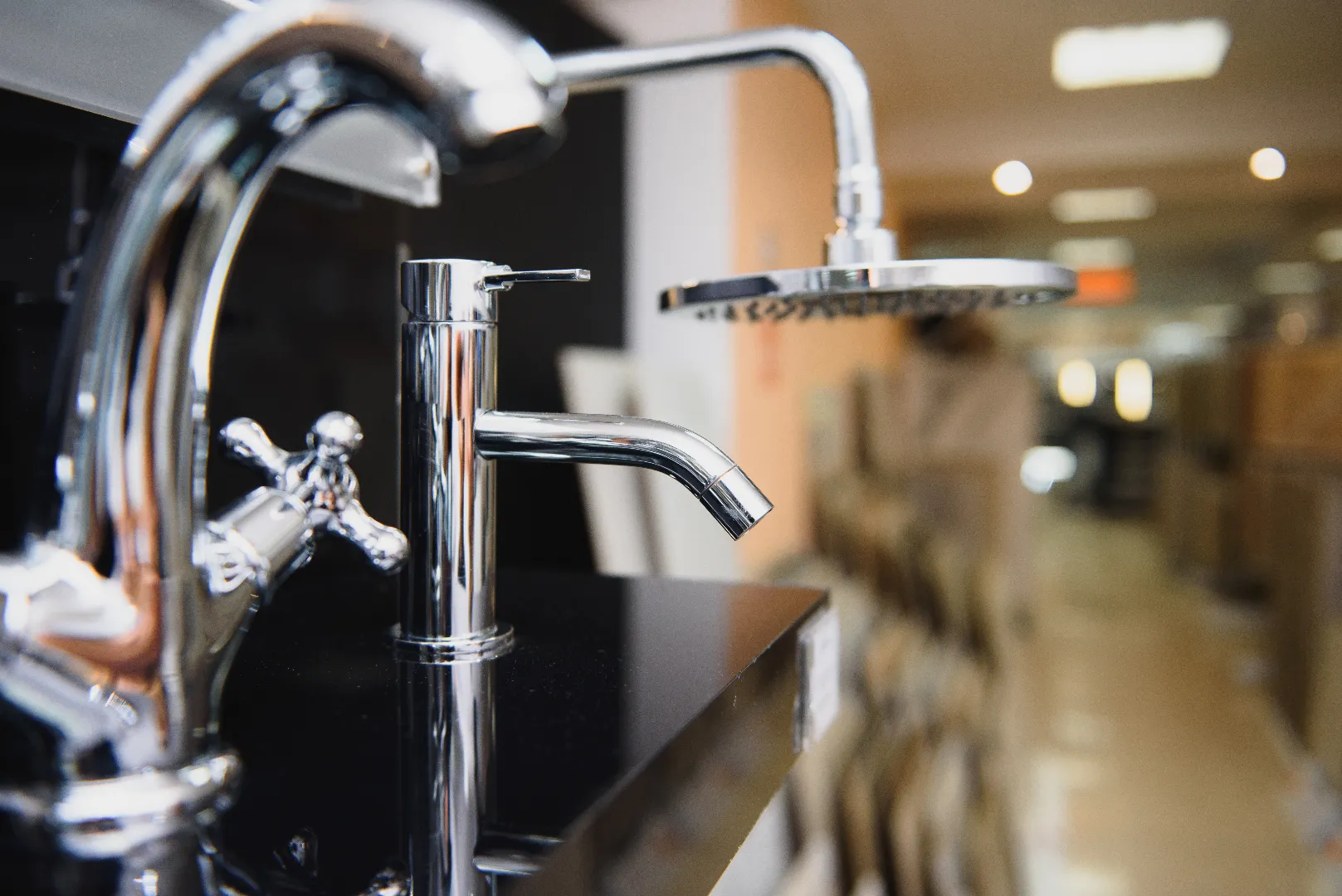
How Much Does a Dripping Faucet Cost in Toronto?
The math on a dripping faucet is eye-opening. A leaky faucet Toronto homeowners ignore for a year wastes real money. A faucet that drips one drop per second releases approximately 34 millilitres per minute, which equates to roughly 11,356 litres (3,000 US gallons) per year. Toronto Water charges approximately $3.90 per cubic metre for water and an additional charge for wastewater processing. The combined rate means that single-drip faucet costs you about $44 to $55 annually in wasted water. Faucet repair Toronto service for a standard dripping tap is one of the most affordable plumbing calls at $100–$200.
A faucet leaking at a faster stream, not a drip but a thin trickle, can waste 2,000 litres or more per day, driving annual waste costs into the hundreds of dollars. Consider that many Toronto homes built in the 1960s and 1970s have original or near-original plumbing fixtures with multiple deteriorating washers and O-rings, and it becomes clear why a home audit of all faucets is a genuinely valuable annual exercise.
Beyond water cost, there's the damage factor. A faucet that leaks at its base or from under the sink, rather than from the spout, can saturate cabinet flooring, encourage mould growth inside enclosed sink cabinets, and eventually damage subflooring. A $50 repair ignored for two years can become a $3,000 cabinet, subflooring, and mould remediation project. Faucet leaks are never worth ignoring.
The 4 Types of Faucets Found in Toronto Homes
Before attempting any repair, you need to know what type of faucet you have, because each type fails differently and requires different replacement parts. Toronto homes contain all four major faucet types:
- Compression faucets: the oldest design, with two separate handles (hot and cold) that physically compress a rubber washer against a valve seat to stop water flow. Extremely common in pre-1980 Toronto homes. They have a distinctive resistance when you turn them off, as you're literally squeezing the washer into the seat. Compression faucets are the most likely type to drip from the spout.
- Ball faucets: single-handle designs where a rotating ball with holes controls both flow and temperature simultaneously. Common on kitchen faucets from the 1980s through to recent years. They drip because of worn springs, seats, or O-rings inside the ball housing.
- Cartridge faucets: single or double-handle designs using a removable cartridge that controls water flow and temperature. Cartridges are self-contained and typically straightforward to replace as a unit. Very common in Canadian homes from the 1990s onwards, and in bathroom faucets from brands like Moen, Price Pfister, and Delta.
- Ceramic disc faucets: premium designs using two ceramic discs that rotate against each other to control flow. Extremely durable and long-lasting, but when they fail, the ceramic discs or cylinder need replacement. Common in higher-end fixtures.
Identifying Which Type of Faucet You Have
The repair approach, the parts you need, and the tools required all depend on correctly identifying your faucet type. Here's how to identify each quickly:
If you have two separate handles and feel resistance when turning them fully off, that's a compression faucet. If you have a single handle that moves side-to-side for temperature and forward-back for flow, and it feels loose with a slight wobble, that's likely a ball faucet. If you have a single handle that moves smoothly up and down or side to side with a firm, controlled action, that's almost certainly a cartridge faucet. If the handle has a very smooth, premium feel with almost no mechanical sensation, it may be ceramic disc.
For bathroom faucets with two separate handles that use cartridges, each handle has an individual cartridge. Knowing your faucet brand makes part identification much easier. Look under the sink for the brand name on the body, or note the logo on the handle or spout. Moen, Delta, Kohler, American Standard, and Pfister all have model lookup tools on their websites. Enter the model number and get the exact replacement cartridge or repair kit.
Common Causes of Faucet Leaks in Toronto Homes
Faucet leaks in Toronto homes have predictable causes depending on where the leak is located:
- Worn O-rings: rubber O-rings seal moving parts in ball and cartridge faucets. Toronto's moderately hard water accelerates rubber degradation, causing O-rings to crack and lose their seal. A leak from the handle area or faucet base typically indicates O-ring failure.
- Worn washers: in compression faucets, the rubber washer at the bottom of the valve stem is pressed against the seat every time you turn off the tap. Years of this friction wears the washer flat or breaks it apart. This is the most common cause of dripping from the spout in older Toronto homes.
- Worn or damaged cartridge: in cartridge faucets, the entire cartridge eventually wears out and begins allowing water to pass through even in the off position. Replacing the cartridge resolves most cartridge faucet leaks.
- Corroded valve seat: the valve seat in compression faucets is the contact point for the washer. Sediment from Toronto's water supply can collect and corrode the brass seat, preventing a clean seal even with a new washer. A pitted or corroded seat needs reseating with a special tool or replacement.
- Loose or corroded packing nuts: the packing nut surrounds the valve stem and prevents water from escaping up around the handle. Over time it loosens or the packing material inside wears out, causing leaks around the base of the handle rather than the spout.
DIY Faucet Repairs That Most Toronto Homeowners Can Handle
Several faucet repairs are genuinely DIY-friendly, requiring only basic tools and parts available at any GTA hardware store:
Replacing a worn washer in a compression faucet is the classic DIY plumbing repair. Shut off the supply valves under the sink, remove the handle (usually one screw under a decorative cap), use pliers or a wrench to unscrew the packing nut, pull out the valve stem, and replace the worn rubber washer at the stem's base with an identical new one. Reassemble in reverse order. Parts cost under $2. The entire job takes 20 to 30 minutes per handle.
Replacing a cartridge faucet cartridge is equally approachable. Once the supply is off and the handle removed, a cartridge retaining clip or nut holds the cartridge in place. Pull the cartridge straight up (a cartridge puller tool helps with stubborn ones ($10 at hardware stores)), take it to the hardware store for a matched replacement, and insert the new one. Orientation matters, as most cartridges are keyed so they only fit one way. Total parts cost: $15 to $45 depending on brand.
Tightening a packing nut is the simplest fix of all. If water is leaking around the base of the handle on a compression faucet, try using a wrench to tighten the packing nut (the large nut around the valve stem) by a quarter turn at a time. Often a slightly loose nut is all that's causing the leak, and tightening it takes less than two minutes.
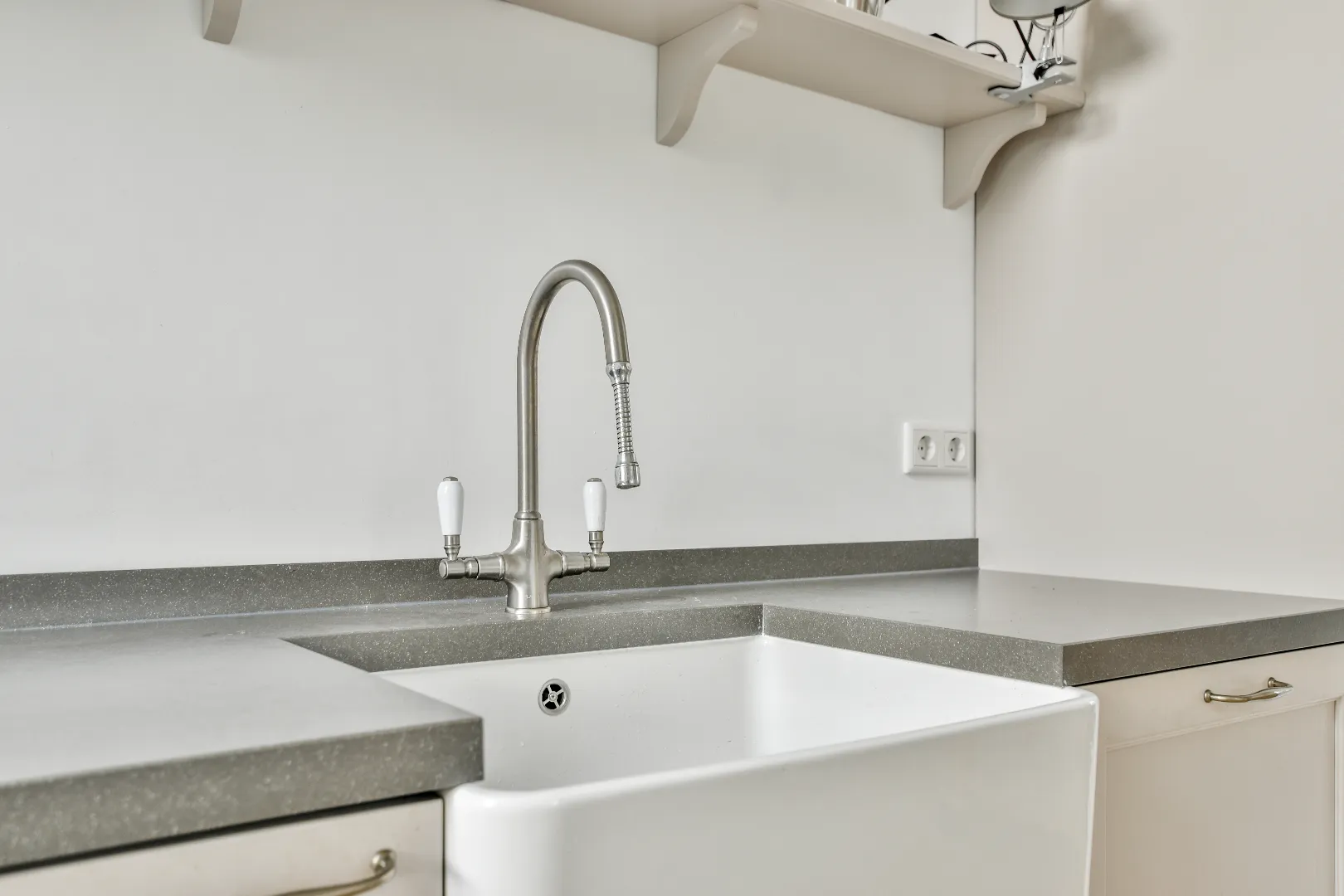
When You Should NOT Attempt a DIY Faucet Repair
Knowing when to stop and call a licensed Toronto plumber is just as important as knowing what you can tackle yourself. Stop and call a professional when:
- No visible way to shut off the supply water. If there are no shutoff valves under the sink or behind the fixture, the only way to shut off water to the faucet is the home's main shutoff. This is not a barrier to repair, but without isolating the fixture, any mistake immediately affects the whole house. A plumber will typically install shutoff valves as part of the repair job, which is the right approach.
- The shutoff valve is corroded and won't turn. Old compression-style shutoff valves in Toronto homes built before the 1980s frequently seize. Forcing a stuck valve can snap the stem, requiring emergency repair with the main supply off. If your shutoff valves are old and haven't been operated in years, have a plumber replace them alongside your faucet repair.
- The leak is coming from under the sink at the supply line. A leak at the flexible supply line or its connections to the shutoff valve or faucet body is not a faucet internal repair. It's a supply line connection issue that can escalate to water damage quickly. Replace the supply line (easy) but check that the shutoff valve and faucet connections are sound (less straightforward).
- The faucet is part of a larger plumbing system issue. If the faucet is leaking from the wall rather than the fixture itself, or if there are signs of pipe corrosion in the supply lines inside the wall, the faucet is a symptom rather than the source. This needs a professional assessment, as problems that extend beyond the fixture to the supply plumbing may require water line repair to resolve properly.
The Tools You'll Need for a Basic Faucet Repair in Toronto
A basic DIY faucet repair requires very few tools. Most Toronto homeowners already have most of these:
- Adjustable pliers or slip-joint pliers (wrap jaws with tape to avoid scratching chrome)
- Phillips and flathead screwdrivers
- Allen hex key set (many faucet handles use set screws)
- Small utility knife or pick for removing decorative caps
- Bucket and old towels
- Replacement parts matching your faucet type and brand
- Plumber's grease (silicone-based, for lubricating O-rings and cartridges)
Cartridge puller tools ($10 to $15) are optional but invaluable for stuck Moen cartridges, which are notorious for being difficult to remove without the tool. Don't force a cartridge, as you risk cracking the faucet body, which turns a $25 repair into a $300 faucet replacement.
When Faucet Replacement Makes More Sense Than Repair
Sometimes the smartest financial decision is replacement rather than repair. Consider a new faucet when:
- The faucet is more than 15 to 20 years old and has required multiple repairs
- Visible corrosion, green oxidation, or mineral staining has etched the chrome or finish
- The cartridge or valve seat is damaged in a way that makes sealing unreliable
- Parts are no longer available for an older or discontinued model
- You are renovating the bathroom or kitchen and want to update the look
A new mid-range kitchen faucet from Moen, Kohler, or Delta runs $150 to $400 at retail. Professional installation by a licensed Toronto plumber adds $150 to $250 in labour. The total cost of $300 to $650 for a fully installed new faucet with a manufacturer's warranty is often more economical than spending $200+ to repair an aging fixture that will likely need another repair within a year or two.
How Much Does Faucet Repair Cost in Toronto?
For a standard faucet repair such as replacing a cartridge, washer, or O-rings, expect to pay $100 to $250 for a licensed Toronto plumber, including the service call, labour, and parts. The bulk of the cost is the minimum service call fee, which most Toronto plumbing companies charge at $100 to $150 for the first 30 minutes of work. If your home has multiple leaky faucets, having a plumber address all of them in a single visit is far more cost-effective than separate service calls.
More complex repairs, such as corroded valve seats requiring reseating, failed ball faucet assemblies requiring a full rebuild kit, or repairs complicated by corroded shutoff valves, can push costs to $200 to $350. If the visit reveals supply line issues or shutoff valve problems, add $100 to $200 per valve replacement. Getting all deferred maintenance done in a single visit saves on repeat service call fees.
How Much Does Faucet Replacement Cost in Toronto?
Faucet replacement costs vary significantly by fixture type and brand. A standard single-handle bathroom faucet professionally replaced runs $250 to $450 including a mid-range faucet and labour. A kitchen faucet with a pull-down spray head runs $350 to $600 installed. High-end kitchen faucets from premium brands (Grohe, Hansgrohe, Brizo) push installed costs to $700 to $1,500.
Bathtub and shower faucet replacement is more involved than sink faucet work. Accessing the valve requires opening the wall in some configurations, and the valve body itself may need replacement. Tub and shower valve replacement in Toronto typically runs $400 to $900 depending on accessibility and whether valve replacement or cartridge replacement alone resolves the issue. Always get a written quote from your licensed plumber before authorizing work.
Frequently Asked Questions
Is a dripping faucet really a big deal?
Yes, more than most homeowners realize. A faucet dripping once per second wastes over 11,000 litres of water annually and costs $40 to $60 per year at Toronto water rates. A faster drip can waste far more. Beyond the water cost, a leak ignored at the base of a faucet can silently damage the cabinet below, promote mould growth in the cabinet interior, and eventually compromise subflooring. The repair cost is almost always a fraction of the damage cost from ignoring the leak for months or years.
How do I turn off the water to fix a faucet myself?
For sink faucets, look under the sink for two shutoff valves: one on the hot water line and one on the cold. Turn each clockwise until it stops. Then open the faucet to release any pressure remaining in the line before disassembling. If the valves under the sink are absent or won't close fully, you'll need to shut off the main water supply valve, typically located in the basement where the service line enters the home. Always confirm the supply is fully off by turning the tap. If no water flows, you're good to proceed.
What is a faucet cartridge?
A faucet cartridge is a self-contained plastic or brass cylinder inside the faucet body that controls water flow and temperature mixing. Unlike older compression faucets where a rubber washer physically squeezes against a metal seat, cartridge faucets use the cartridge as a single replaceable unit that contains all the internal seals and valve components. When a cartridge wears out, you replace the entire cartridge rather than individual O-rings or washers. Cartridges are brand-specific, so a Moen cartridge won't fit a Delta faucet, and knowing your brand is essential before purchasing parts.
Can a leaking faucet cause water damage?
Absolutely, and the damage pathway depends on where the leak occurs. A spout drip that falls into the drain causes no structural damage but wastes water and money. A leak at the faucet base, under the deck plate, or from supply line connections will saturate the cabinet below the sink over time. Prolonged moisture in an enclosed cabinet is ideal for mould and mildew growth and will eventually rot wood cabinet components and the subfloor underneath. Emergency plumbers in Toronto regularly encounter mould remediation costs of $1,000 to $5,000 that trace back to a small, ignored faucet leak.
How much does a plumber charge to replace a faucet in Toronto?
Labour for a straightforward faucet replacement in Toronto, swapping out an existing faucet for a new one in the same location, runs $150 to $250, not including the faucet itself. If you supply the faucet, the plumber supplies the labour and any incidental parts like new supply lines or shutoff valves as needed. If the plumber supplies the faucet, expect a markup on the fixture. Getting quotes from two or three licensed Toronto plumbers is always wise for any job over $300, and every reputable company will provide a written estimate before beginning work.
Still Have a Faucet & Fixture Repair Problem in Toronto & GTA?
Describe your faucet & fixture repair issue below and a licensed Toronto & GTA plumber will call you back in under 15 minutes. No answering service, no voicemail.
- Licensed & Insured Master Plumbers
- 60-Minute Emergency Response in Toronto & GTA
- Real Plumber Answers, No Answering Service
- Upfront Pricing Before Any Work Begins
- 24/7 Service, 365 Days a Year Including Holidays
Limited Same-Day Spots Available Today
Our dispatch fills quickly. Submit now to secure your slot.
Get a Free Quote in 15 Minutes
Takes 30 seconds to fill out. We'll do the rest.