Hard Water in Toronto: What It's Doing to Your Plumbing
Hard water in Toronto is a fact of life for GTA homeowners, but most people don't fully understand what it's quietly doing to their plumbing system year after year. Limescale deposits from Toronto's mineral-rich tap water accumulate inside water heaters, narrow pipe diameters, clog faucet aerators, destroy fixture finishes, and shorten the lifespan of every appliance that uses water in your home. The damage is gradual, often invisible, and entirely preventable once you understand what you're dealing with.
What Is Hard Water?
Hard water is water that contains elevated concentrations of dissolved minerals, primarily calcium (Ca²⁺) and magnesium (Mg²⁺) ions. These minerals are picked up as groundwater or surface water moves through limestone, chalk, and dolomite geological formations. The harder the rock the water travels through, the more minerals it carries.
Water hardness is measured in grains per gallon (GPG) or milligrams per litre (mg/L, equivalent to parts per million). The standard classification system rates water as soft below 1 GPG, moderately hard from 3.5 to 7 GPG, hard from 7 to 10.5 GPG, and very hard above 10.5 GPG. These mineral concentrations are completely safe to drink; calcium and magnesium are essential dietary minerals, but the concentrations are highly problematic for plumbing systems, appliances, and fixtures over time.
When hard water is heated or evaporates, the dissolved minerals precipitate out of solution and form calcium carbonate scale, commonly known as limescale. This is the white, chalky, rock-like deposit you see around faucets, showerheads, and inside kettles. Inside pipes and water heaters, the same process occurs invisibly, progressively building up year after year.
How Hard Is Toronto's Water?
Toronto's tap water is drawn from Lake Ontario and treated at one of several water treatment facilities before delivery through the municipal distribution system. Lake Ontario water has a hardness level of approximately 120 to 170 mg/L (7 to 10 GPG), which classifies it as moderately hard to hard by Canadian standards. This is consistent with measurements reported by Toronto Water's annual water quality reports, which typically show hardness in the range of 6 to 8 grains per gallon at the tap.
This places Toronto in a worse position than cities with genuinely soft municipal water (like Vancouver, which draws from soft mountain reservoirs at under 1 GPG) but better than some Ontario municipalities that draw from groundwater sources that can exceed 20 GPG. Mississauga, Brampton, Markham, and other GTA municipalities drawing from Lake Ontario have similar hardness levels. Communities drawing from groundwater sources in rural Ontario often have significantly harder water.
The practical implication: in Toronto, limescale buildup is a real and ongoing concern. Over a 10-year period, a Toronto home's plumbing system accumulates significant scale deposits that need management through either a water softener Toronto installation or periodic descaling maintenance by a licensed plumber Toronto professional. Ignoring hard water effects costs the average GTA homeowner $500–$1,500 per decade in premature appliance replacements and pipe repair Toronto work.
How Hard Water Damages Your Water Heater
The water heater is where hard water damage is most costly and most clearly measurable. When cold hard water enters the water heater tank and is heated to 60°C (the recommended temperature to prevent Legionella bacteria), the calcium carbonate in the water precipitates out and falls to the bottom of the tank as sediment. This process happens every time the tank heats water, which in a busy Toronto household is many times per day.
Over time, this sediment layer accumulates on the tank floor, directly above the heating element (in electric heaters) or above the burner (in gas heaters). A thick sediment layer acts as insulation between the heat source and the water, forcing the heater to run longer and burn more energy to achieve the target temperature. Studies of sediment-affected water heaters have found energy efficiency reductions of 20 to 40% compared to a clean tank, meaning a Toronto homeowner can be paying 30% more in gas or electricity to heat water than they would with a well-maintained system.
The sediment problem accelerates tank degradation. Hot spots form where the heating element is insulated by sediment, causing the tank lining to crack and the anode rod to deplete faster. A water heater in a Toronto home without annual flushing typically lasts 8 to 10 years. A properly flushed and maintained unit can last 15 years or more. The sediment-induced premature replacement cost averages $1,500 to $2,500 for a new unit plus installation, a significant hidden cost of hard water.
How Hard Water Affects Your Pipes
Limescale buildup inside supply pipes is a slow-motion problem that becomes serious over decades in Toronto homes. Inside copper pipes, which are standard in GTA homes built from the 1950s onward, calcium carbonate deposits gradually reduce the inner diameter of the pipe, restricting flow and increasing water pressure in the narrowed sections.
The hot water lines are affected more severely than cold water lines because scale precipitates more readily at higher temperatures. This is why homeowners with hard water problems often notice that hot water pressure is noticeably weaker than cold water pressure; the hot water pipes are more restricted. Over a 20 to 30-year period, scale buildup in hot water lines can reduce their effective bore by 30 to 50% in severe cases, causing meaningful flow restrictions that require pipe replacement.
In older Toronto homes with galvanized steel pipes, already prone to internal corrosion, hard water accelerates the corrosion process. The mineral deposits form a layer that traps moisture against the pipe wall and creates galvanic activity that speeds up rust formation. What might be a 30-year life expectancy for galvanized pipe in soft-water conditions can be shortened significantly in hard water environments.
How Hard Water Destroys Fixtures and Faucets
Fixtures and faucets are the most visibly affected components of a hard water plumbing system. The damage occurs on multiple levels:
Aerator clogging: Faucet aerators, the small screens at the tip of every faucet, are mineral deposit magnets. Scale rapidly accumulates in the fine mesh, progressively reducing flow until the aerator is completely blocked. In Toronto homes without water treatment, aerators typically need cleaning every three to six months.
Showerhead nozzle blockage: Shower nozzles clog with mineral deposits, causing uneven spray patterns and reduced flow. Many Toronto homeowners simply accept reduced shower pressure as normal without realizing it's a maintenance issue rather than an inherent property of their water system.
O-ring and washer degradation: Mineral deposits accelerate the wear of rubber components inside faucets. When scale builds up on the valve seat that a washer closes against, the uneven surface causes the washer to wear unevenly and begin leaking sooner than it would in soft water conditions. This is a significant contributor to the higher frequency of faucet repairs in hard water areas.
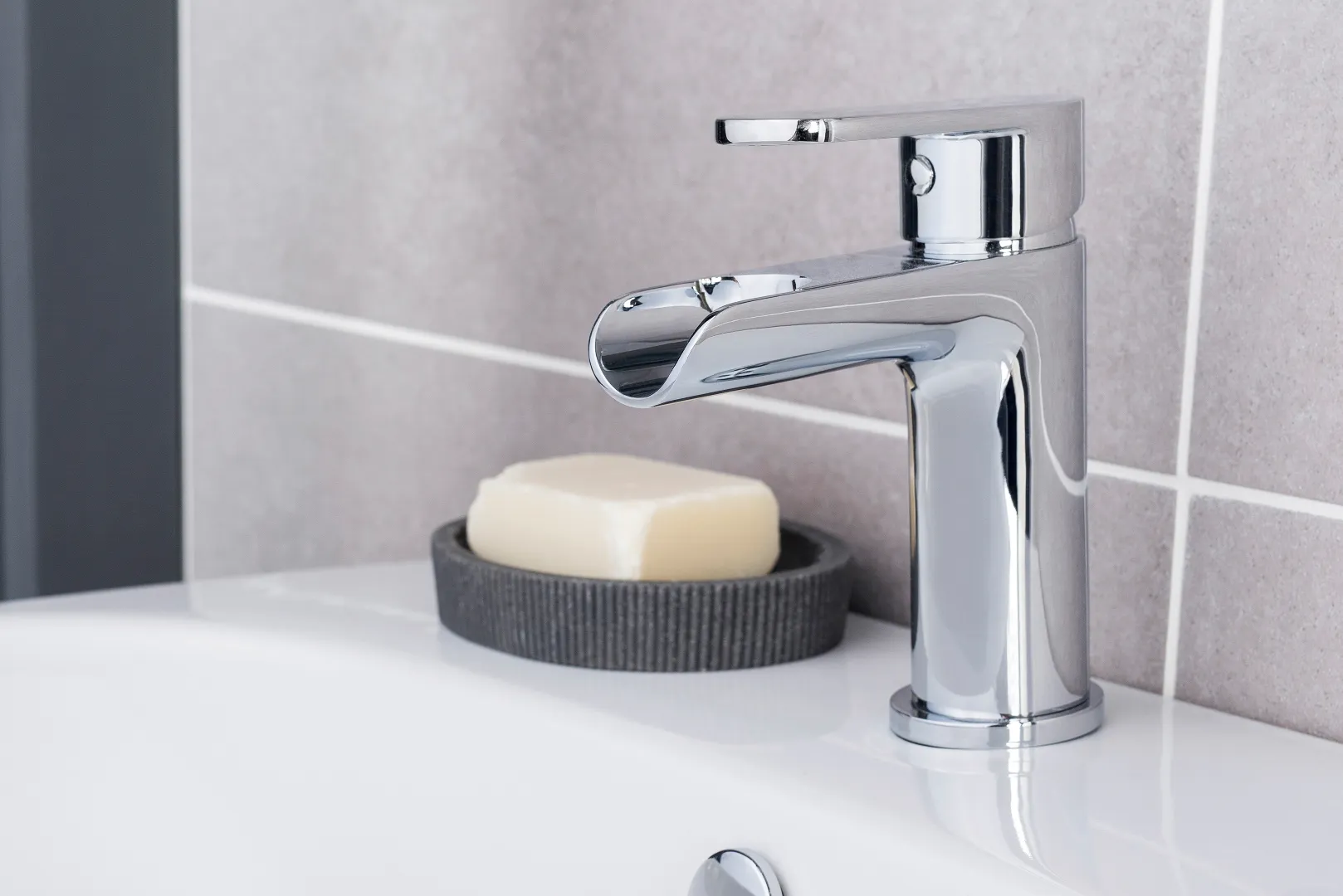
Finish damage: White mineral staining and scale deposits on chrome, nickel, and brushed finishes are difficult to remove once established and can permanently etch polished surfaces. The visual deterioration of fixtures in hard water homes is substantially faster than in soft water environments.
Visible Signs of Hard Water Damage in Your Toronto Home
Hard water damage reveals itself through several telltale signs that Toronto homeowners can identify without any special equipment:
- White mineral deposits around faucets and showerheads. The crusty white or off-white buildup visible at the base of faucet spouts and around showerhead nozzles is calcium carbonate scale. The thickness and spread of these deposits gives a rough indication of how aggressively your water is depositing minerals.
- Crusty scale around drains. Mineral rings around sink, tub, and shower drains indicate prolonged contact of hard water with these surfaces. The brownish-white ring is a combination of calcium carbonate and soap scum.
- Soap scum that doesn't rinse away. Hard water reacts with soap to form calcium stearate, an insoluble soap scum that doesn't dissolve in water the way soap does in soft water conditions. Persistent soap scum in showers and bathtubs despite regular cleaning is a classic hard water indicator.
- Cloudy glassware and dishes from the dishwasher. The white film on glassware after dishwasher cycles is etched mineral deposits. Once glass is etched by hard water over many cycles, the cloudiness becomes permanent and cannot be removed.
- Reduced water flow from showerheads. A showerhead that once had strong, even pressure but now produces a weak, uneven spray has partially blocked nozzles from mineral deposits, even if it looks clean on the outside.
The Annual Cost of Hard Water Damage in Canadian Homes
Studies examining the economic impact of hard water on Canadian households have consistently found significant costs associated with untreated hard water. Water Quality Association research indicates that homes with hard water experience 20 to 25% higher water heating energy costs due to sediment insulation effects. The same research found that appliances such as dishwashers, washing machines, and water heaters have service lives 30 to 40% shorter in hard water conditions versus soft water conditions.
Aggregating these effects for a typical Toronto home: higher water heating costs of $100 to $200 annually; more frequent faucet and fixture repairs; early water heater replacement (saving 3 to 5 years of full water heater life worth $500 to $750 in accelerated depreciation annually); and higher soap and detergent consumption (hard water requires 50 to 75% more soap to achieve the same lather as soft water). The total annual hard water cost for an average Toronto home is estimated at $300 to $800, before accounting for any major appliance premature replacement.
Solutions for Hard Water in Toronto Homes
Several effective solutions exist for managing hard water in Toronto homes, ranging from whole-home treatment to targeted maintenance:
Whole-home ion exchange water softener: the most effective solution. An ion exchange water softener replaces calcium and magnesium ions in the water with sodium ions as the water passes through a resin bed. The result is genuinely soft water throughout the entire home, with no scale formation in pipes, water heater, or fixtures. Salt-based softeners require periodic recharging with sodium chloride (table salt) and periodic resin bed regeneration. They are installed on the main cold water inlet to the home, after the shutoff valve but before any distribution. This is the gold standard solution for hard water damage prevention in Toronto.
Salt-free water conditioners (template-assisted crystallization): a newer technology that changes the form of calcium carbonate crystals so they don't adhere to pipe surfaces, rather than removing them from the water. These systems require no salt, no electricity, and no backwash drain. They are effective at preventing scale buildup but do not actually soften the water; they are scale inhibitors rather than true softeners. Performance varies by manufacturer and water chemistry. They are a good option for homeowners who want scale prevention without the ongoing salt maintenance of a traditional softener.
Reverse osmosis for drinking water: a point-of-use solution for the kitchen sink that provides genuinely pure, mineral-free water for drinking and cooking. RO systems do not treat whole-home water supply; they are a drinking water solution only, but they produce high-quality water for consumption and eliminate the scale and taste effects of hard water at the most critical use point.
Regular appliance descaling: for homeowners who choose not to install a water treatment system, scheduled descaling of the water heater (annual flush), showerheads (vinegar soak every three to six months), and faucet aerators (quarterly cleaning) limits the accumulation of scale damage. This approach manages symptoms rather than treating the cause, but it is effective at extending appliance and fixture life.
How Much Does a Water Softener Cost in Toronto?
A professionally installed whole-home water softener in Toronto costs approximately $800 to $3,000, depending on the system capacity, brand, and installation complexity. Entry-level single-tank systems sized for smaller households run $800 to $1,200 installed. Mid-range systems with better resin capacity and smart regeneration controls run $1,200 to $2,000. Premium systems with dual-tank configurations for continuous soft water availability run $2,000 to $3,000.
Many Toronto water treatment companies also offer rental programs at $25 to $50 per month that include installation, maintenance, and salt delivery service. Rental is appealing for homeowners who don't want the upfront cost or maintenance responsibility, though total rental costs over 10 years typically exceed the purchase price of an owned system. The return on investment for a purchased system, factoring in energy savings, extended appliance life, and reduced soap consumption, is typically achieved within 3 to 5 years of installation for most Toronto households.
Descaling Your Water Heater and Appliances
For homeowners managing hard water without a treatment system, regular descaling is essential maintenance. For water heaters, annual flushing removes accumulated sediment and dramatically extends service life. The process involves connecting a garden hose to the drain valve at the bottom of the tank, turning off the heating element or burner, and allowing the tank to drain while cold water flushes through to clear the sediment. This job takes 30 to 60 minutes and can be done by a homeowner comfortable with basic plumbing, or performed by a plumber as part of an annual service call.
For showerheads and aerators, white vinegar is the most effective household descaling agent. Submerge or soak the component in undiluted white vinegar for 4 to 12 hours; the acetic acid dissolves calcium carbonate deposits efficiently. For stubborn scale on fixtures, commercial descaling products (CLR, Lime-A-Way) provide stronger acidic action. Avoid abrasive scrubbing on plated or brushed finishes, as it damages the protective finish and accelerates future scale adhesion.
Frequently Asked Questions
Is Toronto water hard or soft?
Toronto's municipal tap water is classified as moderately hard to hard, with a typical hardness of 120 to 170 mg/L (6 to 10 grains per gallon). This places it in the moderately hard range, harder than cities like Vancouver that draw from soft mountain sources, but softer than many Ontario communities drawing from limestone-rich groundwater. Toronto's water source is Lake Ontario, which carries moderate mineral content from its watershed. At this hardness level, scale formation in pipes, water heaters, and fixtures occurs steadily over time without water treatment or regular maintenance descaling.
Does hard water cause health problems?
No, hard water is safe to drink and is not associated with any health problems. Calcium and magnesium are essential dietary minerals, and drinking hard water provides a small additional contribution to daily mineral intake. The World Health Organization has reviewed the evidence on hard water and health and found no adverse health effects at any naturally occurring hardness level. Hard water may cause some minor skin dryness or irritation in sensitive individuals due to soap scum residue, but this is a cosmetic and comfort issue rather than a health concern. Softened water should not be used for drinking or cooking by people on sodium-restricted diets, as the ion exchange process adds sodium.
How can I reduce hard water damage without a softener?
Without a whole-home water softener, the most effective management strategies are: annual water heater flushing to remove sediment before it insulates the heating element; quarterly cleaning of all faucet aerators and showerheads with white vinegar; installation of a salt-free scale inhibitor on the water heater inlet line; use of dishwasher rinse aid to prevent mineral etching on glassware; and periodic descaling of appliances (coffee maker, kettle, dishwasher) with vinegar or citric acid. These measures significantly reduce the visible effects and appliance damage from hard water but require ongoing discipline to be effective.
Does hard water void appliance warranties?
Some appliance manufacturers include hard water damage exclusions in their warranties, particularly for water heaters, dishwashers, and washing machines. The specifics vary by brand and model. Manufacturers that sell in Canadian markets are generally aware that much of Ontario has hard water and don't exclude it as a warranty condition, but it is worth reviewing your appliance warranty documentation. Warranties more commonly exclude damage from lack of maintenance, such as failing to flush a water heater annually, than from hard water chemistry itself. When in doubt, contact the manufacturer with your water hardness level to confirm warranty coverage applicability.
How long do pipes last with hard water vs. soft water?
Copper pipes, the standard in most Toronto homes, have a rated service life of 50 to 70 years under normal conditions. In hard water environments without any treatment, copper pipes can develop pinholes from scale-induced corrosion acceleration in 30 to 40 years or less in some cases. With a water softener, copper pipe service life approaches its rated expectancy. Galvanized steel pipes, which are found in many older Toronto homes, have a drastically shorter lifespan in any water chemistry; hard water accelerates their corrosion beyond the already-limited 30 to 50-year service life. PEX plastic pipes (increasingly common in renovations) are essentially immune to hard water damage and corrosion, making them a superior long-term choice for GTA homes with hard water.
Still Have a Plumbing Maintenance Problem in Toronto & GTA?
Describe your plumbing maintenance issue below and a licensed Toronto & GTA plumber will call you back in under 15 minutes. No answering service, no voicemail.
- Licensed & Insured Master Plumbers
- 60-Minute Emergency Response in Toronto & GTA
- Real Plumber Answers, No Answering Service
- Upfront Pricing Before Any Work Begins
- 24/7 Service, 365 Days a Year Including Holidays
Limited Same-Day Spots Available Today
Our dispatch fills quickly. Submit now to secure your slot.
Get a Free Quote in 15 Minutes
Takes 30 seconds to fill out. We'll do the rest.