Water Softener Installation in Toronto: GTA Homeowner's Guide
Toronto's water is moderately hard to hard, sitting between 120 and 170 mg/L of dissolved calcium and magnesium. Over years, that mineral load quietly scales up your water heater, narrows pipe diameters, clogs showerhead nozzles, and shortens the life of every appliance connected to your water supply. A water softener installation in Toronto is one of the most cost-effective plumbing upgrades a GTA homeowner can make, but choosing the right system and having it installed correctly makes all the difference between a solution that works and one that creates new problems.
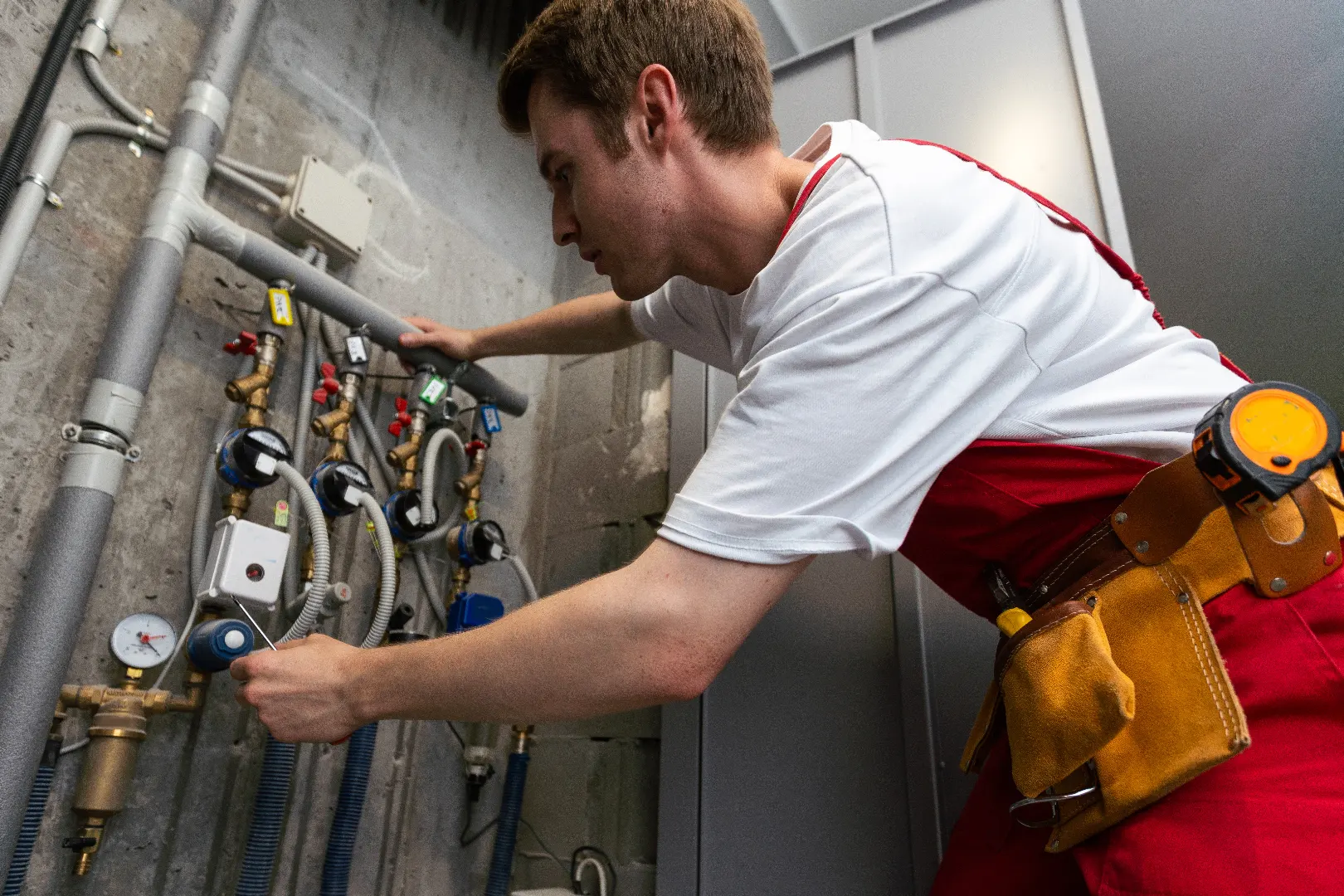
Why Toronto Homeowners Need Water Treatment
Toronto's tap water originates from Lake Ontario and is treated at municipal plants before entering the distribution network. It arrives at your tap clean and safe to drink, but with a hardness level that classified it as moderately hard to hard by Canadian standards. If you have noticed white crusty deposits around your faucets, soap that refuses to lather properly, glassware that comes out of the dishwasher cloudy, or a water heater that runs longer than it used to, you are already seeing the effects of Toronto's mineral-rich water at work.
Understanding what hard water does to your plumbing over time is the first step. The second step is deciding what to do about it. A water softener does not improve the safety of your water; it protects the infrastructure connected to it. For most Toronto homes, particularly those with water heaters, dishwashers, and copper supply lines, the investment pays for itself within a few years through lower energy bills, fewer appliance repairs, and extended fixture life.
How a Water Softener Works
A traditional ion exchange water softener removes the calcium and magnesium ions responsible for hardness and replaces them with sodium ions. The process happens inside a mineral tank filled with thousands of small resin beads, each carrying a negative charge that attracts the positively charged calcium and magnesium ions in the incoming water. As hard water flows through the resin bed, calcium and magnesium attach to the beads and sodium ions are released in their place. The water leaving the tank is soft.
Over time, the resin beads become saturated with calcium and magnesium and lose their softening capacity. At that point, the system runs a regeneration cycle: a concentrated brine solution (made from salt in the brine tank) flows through the resin bed, displacing the captured minerals and recharging the beads with fresh sodium. The mineral-laden brine is then flushed to the drain, and the system returns to service. Most modern softeners run regeneration automatically based on measured water usage, minimizing salt and water consumption.
Salt-Based vs. Salt-Free: Which Is Right for Your Toronto Home?
The two main categories of whole-home water treatment systems serve different needs. Salt-based ion exchange softeners are the gold standard for actual water softening. They genuinely remove hardness minerals, delivering water that lathers easily, produces no scale, and causes zero ongoing pipe or appliance damage from mineral buildup. The trade-off is ongoing salt consumption (typically 4 to 8 bags per year for an average Toronto household), a drain connection for backwash water, and a small sodium addition to the treated water.
Salt-free water conditioners, sometimes marketed as water softeners, work differently. They use a process called template-assisted crystallization (TAC) to change the physical structure of calcium carbonate crystals so they remain in suspension rather than adhering to pipe walls. They do not remove hardness minerals; the water leaving the unit still tests hard. What changes is that the minerals are less likely to precipitate and form scale. Salt-free systems require no electricity, no drain connection, no salt, and no regeneration cycles. They are a legitimate scale-prevention tool, but they are not softeners. Water from these systems does not feel soft, does not lather better than untreated water, and will not reverse existing scale deposits.
For most Toronto homeowners who want the full benefits of soft water throughout the home, a properly sized salt-based ion exchange system is the right choice. Salt-free conditioners are better suited to homeowners who want scale prevention without the maintenance commitment, or who have concerns about sodium in their water.
Sizing a Water Softener for Your GTA Home
A water softener that is too small for your household will run regeneration cycles too frequently, consuming more salt and water than necessary. One that is too large will go too long between regenerations, allowing the resin bed to become fouled. Correct sizing depends on two factors: your household's daily water consumption and your water's hardness level.
Toronto's water hardness runs approximately 7 to 10 grains per gallon (GPG) depending on your specific location in the distribution system. A household's daily water use averages roughly 75 to 100 gallons per person. Multiplying daily household consumption by hardness gives you the daily grain removal requirement. For a family of four in Toronto at 8 GPG: 4 people x 85 gallons x 8 GPG = 2,720 grains per day. A softener should be sized to regenerate no more than once every three days, so this household needs a unit with at least 8,160 grain capacity. Most residential units sold in Canada range from 24,000 to 64,000 grain capacity.
A licensed plumber or water treatment professional can calculate exact sizing for your household and confirm your local water hardness before recommending a unit. Oversizing and undersizing are equally common mistakes when homeowners select units without professional input.
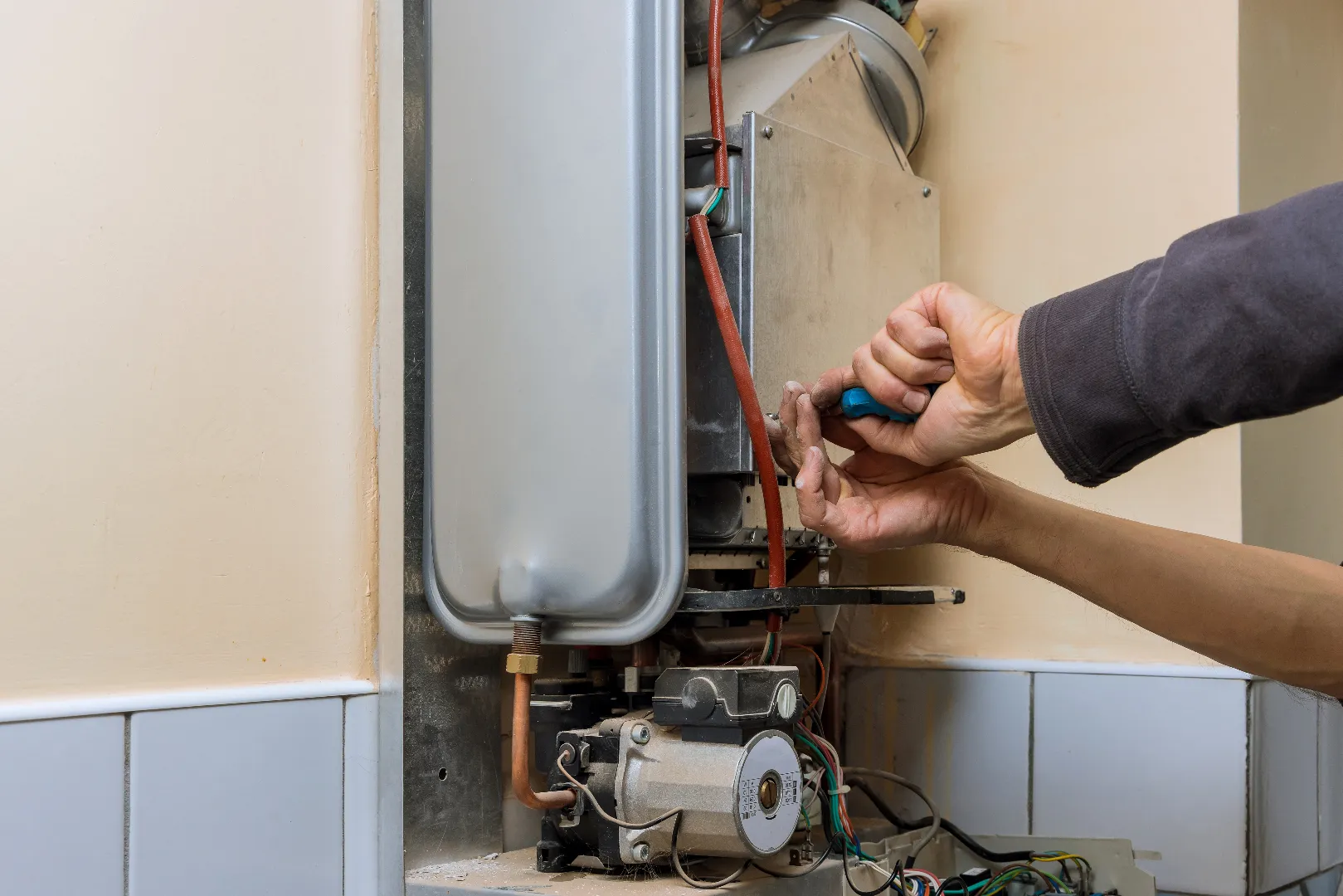
What Water Softener Installation Involves in Toronto
Water softener installation is a plumbing job that requires cutting into the main cold water supply line, adding bypass valves, connecting to a drain for backwash, and in some cases rerouting supply lines to ensure only the cold water supply is softened (outdoor hose bibs and cold water drinking taps are commonly left on the hard water supply). The complexity ranges from straightforward in newer homes with accessible mechanical rooms to involved in older Toronto houses with cramped basements, cast iron drain stacks, and mixed pipe materials.
A typical water softener installation in a Toronto home involves these steps: shutting off the main water supply; cutting into the cold water supply line after the main shutoff valve and pressure regulator; installing a bypass valve assembly so the softener can be isolated for maintenance; connecting the softener inlet and outlet to the supply line; running a drain line from the softener to a floor drain or laundry tub; filling the brine tank with water and the recommended initial salt load; programming the control head with your household size and hardness setting; and running an initial manual regeneration to test the system end to end before restoring water to the house.
The job typically takes two to four hours for a plumber with softener installation experience. Homes where the supply line needs to be rerouted to exclude outdoor taps from softened water, or where drain access requires extending a drain line, will take longer. A pre-installation site visit by the plumber allows accurate time and material estimation before the work begins.
Water Softener Installation Cost in Toronto
Total water softener installation cost in Toronto, including the unit and labour, ranges from approximately $800 to $2,500 for most residential installations. The range reflects differences in system quality, capacity, and installation complexity rather than any single dominant factor.
- Entry-level systems (24,000-32,000 grain capacity): $800 to $1,200 installed. Suitable for smaller households of one to two people with straightforward installation access.
- Mid-range systems (40,000-48,000 grain capacity): $1,200 to $1,800 installed. The most common choice for average Toronto families of three to four people. Units in this range typically include demand-initiated regeneration that optimizes salt and water use based on actual consumption.
- Premium systems (64,000 grain capacity and above): $1,800 to $2,500 installed. Large households, high water use, or homeowners who want the longest intervals between regeneration cycles. Some premium units include twin-tank configurations for continuous soft water during regeneration.
- Rental programs: $25 to $50 per month including installation, maintenance, and sometimes salt delivery. Total cost over 10 years ($3,000 to $6,000) typically exceeds purchase price, but rental eliminates upfront cost and transfers all maintenance responsibility to the supplier.
Labour for installation in Toronto runs $150 to $350 depending on complexity, on top of the equipment cost. Homes where supply line rerouting is needed add $100 to $250 in additional labour and fittings. The water softener cost in Toronto is frequently recovered within three to five years through reduced energy costs, less frequent pipe repair and maintenance, extended appliance life, and lower soap consumption.
Does Water Softener Installation Require a Licensed Plumber in Toronto?
Water softener installation in Ontario falls under plumbing work regulated by the Ontario Building Code. Any work that involves connecting to or modifying the cold water supply piping in your home is technically plumbing work and should be done by or under the supervision of a licensed plumber. In practice, enforcement varies, and some homeowners do install their own softeners without issue. However, there are several reasons to use a licensed professional for this job.
Incorrect installation can create backflow risks if the bypass valve is improperly configured. The drain connection must be installed with an air gap to prevent contaminated drain water from siphoning back into the supply system; a plumber will install this correctly by code. If the installation creates any property damage or insurance claim, unpermitted plumbing work can complicate coverage. And a licensed plumber will size and configure the unit properly, ensuring it works as intended from day one rather than requiring adjustments after the fact.
For the relatively modest additional cost of professional installation over a DIY attempt, the peace of mind and code compliance are well worth it for most Toronto homeowners. Your water line connections need to be done right the first time.
Maintaining Your Water Softener in Toronto
A properly installed water softener requires minimal but consistent maintenance to perform reliably. The primary maintenance task is keeping the brine tank stocked with salt. Most Toronto households consume one to two bags of water softener salt per month, though consumption varies with household size and water use. Use sodium chloride pellets designed for water softeners rather than rock salt, which contains impurities that can reduce system efficiency.
Periodically check the brine tank for salt bridges, a condition where a crust of hardened salt forms above a void in the tank, preventing salt from dissolving properly. Salt bridges are more common in humid environments or when the tank is allowed to run low repeatedly. Breaking up a salt bridge is as simple as inserting a broom handle into the tank and breaking up the crust.
Every one to two years, clean the resin bed with a water softener cleaner to remove iron deposits and organic fouling that can reduce resin effectiveness over time. Toronto's water has low iron levels compared to many Ontario municipalities with groundwater sources, so resin fouling is less of a concern here than in some other regions. Every three to five years, a plumber or water treatment technician should inspect the control head, check the resin bed condition, and verify that all connections are tight and the drain is flowing freely.
Benefits for Pipes, Appliances, and Fixtures
The downstream benefits of a water softener for a Toronto home are substantial and well-documented. Water heaters in softened-water homes accumulate no sediment, maintaining peak efficiency for their entire service life. Studies comparing water heater performance in hard versus soft water conditions consistently show 20 to 40% better energy efficiency in soft water homes, translating to meaningful reductions in annual gas or electricity bills.
Pipes in softened-water homes do not accumulate limescale, preserving their full bore and flow capacity indefinitely. This is particularly significant for older Toronto homes where decades of hard water use have already begun narrowing pipe diameters. While a water softener cannot reverse existing scale deposits in old pipes (that requires descaling or pipe replacement in severe cases), it stops further accumulation from the point of installation forward.
Dishwashers and washing machines in softened-water homes use significantly less detergent to achieve the same cleaning results, typically 50 to 75% less soap than in hard water conditions. Glassware comes out of the dishwasher clear rather than cloudy. Shower enclosures and fixtures stay cleaner with less effort. Skin feels noticeably different when bathing in soft water. These quality-of-life improvements are often what motivate Toronto homeowners to install a softener, even before they fully appreciate the infrastructure protection benefits.
Frequently Asked Questions
How much does it cost to install a water softener in Toronto?
Water softener installation in Toronto costs between $800 and $2,500 including the unit and professional installation. Entry-level systems for smaller homes run $800 to $1,200. Mid-range systems for average families of three to four run $1,200 to $1,800. Premium high-capacity units run $1,800 to $2,500. Labour for the plumbing connections adds $150 to $350 depending on installation complexity. Most homeowners recover this cost within three to five years through lower energy bills, reduced appliance repairs, and less soap consumption.
Do I need a permit to install a water softener in Toronto?
In most cases, a building permit is not required for a straightforward water softener installation in Toronto, as it is considered a like-for-like plumbing appliance addition rather than new construction. However, the work itself must comply with the Ontario Building Code and should be performed by or under the supervision of a licensed plumber. If the installation involves rerouting supply lines or other significant plumbing modifications, a permit may be required. Your plumber can advise on permit requirements for your specific situation before work begins.
What is the difference between a water softener and a water conditioner?
A water softener uses ion exchange to physically remove calcium and magnesium from your water, replacing them with sodium. The treated water genuinely tests soft and produces no scale. A water conditioner (salt-free system) changes the crystal structure of hardness minerals so they are less likely to adhere to surfaces, but does not remove them. The water still tests hard. Conditioners prevent new scale formation but do not deliver the full soft-water benefits of lathering, appliance protection, and feel. For homeowners who want all the benefits of soft water, ion exchange remains the proven solution.
Can I install a water softener myself in Toronto?
Technically, some homeowners do install their own water softeners, but the work involves cutting into your main supply line, installing bypass valves, and making a compliant drain connection with a proper air gap. Errors in any of these steps can create backflow risks, leaks, or a system that doesn't perform correctly. Given that licensed plumber installation adds only $150 to $350 to the total project cost, professional installation is strongly recommended for code compliance, warranty protection, and peace of mind. An incorrect DIY installation can cost more to diagnose and correct than professional installation would have cost upfront.
Where is the best place to install a water softener in a Toronto home?
The ideal location is in your mechanical room or basement, as close as possible to where the main cold water supply line enters the home and after the main shutoff valve. This position treats all water entering the home before it branches to any fixtures or appliances. The unit needs to be within a few feet of a floor drain or laundry tub for the backwash drain connection, and near a standard 120V electrical outlet for the control head. Outdoor hose bibs and any dedicated cold drinking water taps are typically left on the pre-softener (hard) water line to avoid softened water for garden use and to preserve a natural-mineral drinking water source if preferred.
Still Have a Water Line & Plumbing Services Problem in Toronto & GTA?
Describe your water line & plumbing services issue below and a licensed Toronto & GTA plumber will call you back in under 15 minutes. No answering service, no voicemail.
- Licensed & Insured Master Plumbers
- 60-Minute Emergency Response in Toronto & GTA
- Real Plumber Answers, No Answering Service
- Upfront Pricing Before Any Work Begins
- 24/7 Service, 365 Days a Year Including Holidays
Limited Same-Day Spots Available Today
Our dispatch fills quickly. Submit now to secure your slot.
Get a Free Quote in 15 Minutes
Takes 30 seconds to fill out. We'll do the rest.